When more people started working from home and the phrase “remote work” first became common, many assumed the biggest challenge would be staying productive.
In reality, the bigger issue often turns out to be space.
Kitchen tables become desks. Spare bedrooms slowly turn into equipment storage. Paperwork piles up in corners. Before long, the line between living space and working space begins to disappear.
For many households, working from home gradually spreads beyond the room it started in. The result isn’t just clutter, it’s a home that no longer feels like a place to switch off.
According to the Office for National Statistics, hybrid working is now a normal part of working life for a significant share of adults in Great Britain, with 28% working in a hybrid pattern between January and March 2025.
Why Working From Home Often Creates Clutter
Most homes weren’t designed to support permanent office work.
Traditional houses were built around living areas, bedrooms and storage spaces designed for personal life, not daily business activity.
When you start working from home full time, several things change:
- Work equipment accumulates
- Documents and files require storage
- Deliveries and supplies increase
- Office furniture replaces household furniture
Without a plan, work begins to occupy more space than intended.
And once that happens, it becomes difficult to reclaim your home environment.
Creating a Dedicated Workspace When Working From Home
One of the most effective ways to prevent work from taking over your home is to create a clearly defined workspace.
Even if you don’t have a separate office room, boundaries matter.
Consider the following:
- Positioning your desk in a fixed location
- Using shelving or storage units to define the work zone
- Keeping work materials within a specific area
- Avoiding portable work setups that move around the house
The goal is simple: when the workday ends, the workspace remains contained.
Your home should still feel like home.
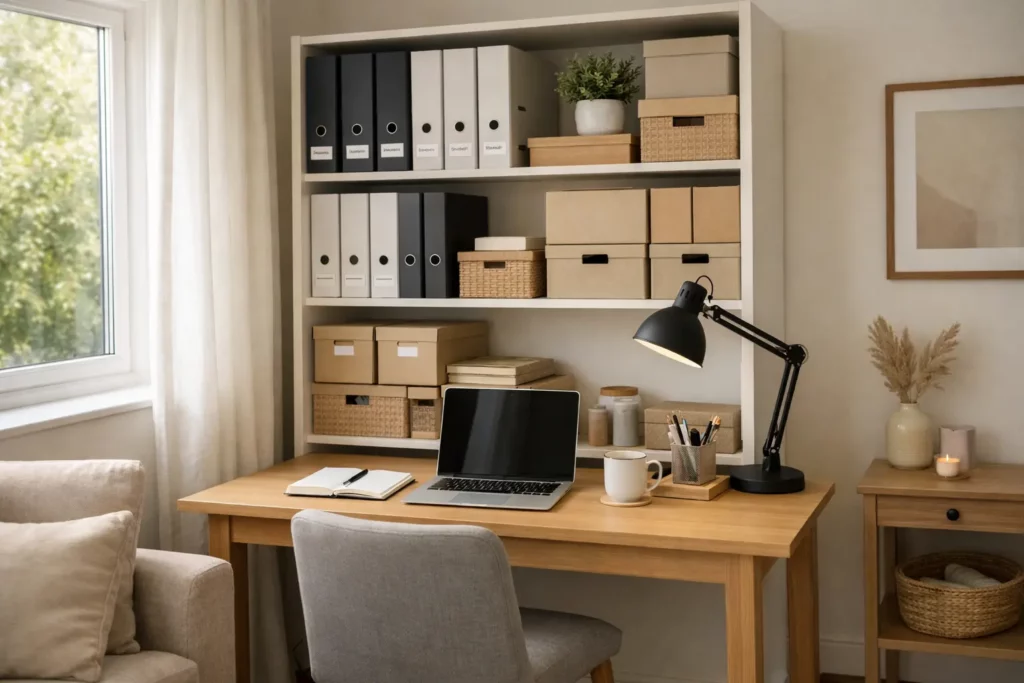
Working From Home? Organisation Matters More Than You Think
Organisation becomes essential once work and home life share the same space.
Small habits can prevent clutter from building up:
- Digitise documents where possible
- Keep only active paperwork nearby
- Use labelled storage boxes for archived materials
- Create a simple filing system
- Clear your desk at the end of each day
A tidy workspace reduces visual stress and makes it easier to stay focused.
It also prevents work from gradually expanding into other rooms.
If you accumulate paperwork over time, it can be worth exploring secure off-site options designed specifically for archiving and protecting important files, such as dedicated document storage services.
Managing Equipment and Supplies While Working From Home
Many remote workers accumulate more equipment than expected.
Common items include:
- monitors
- printers
- spare cables
- packaging materials
- archived documents
- office supplies
These items rarely need to remain on your desk permanently. Instead, they should have designated storage areas. This might include cupboards, shelving or secure storage containers that keep equipment accessible but out of daily view.
For people running small online businesses or selling products from home, extra inventory can quickly overwhelm living space. In those cases, dedicated stock storage can help keep business supplies organised without turning your home into a warehouse.
The key is to prevent work items from spreading throughout the home.
The Psychology of Separate Spaces
There’s also a psychological benefit to creating separation between work and home life.
Environmental psychology research suggests that workspace design and organisation have a measurable impact on productivity and wellbeing. For example, a study led by Dr Craig Knight at the University of Exeter found that employees who had control over how their workspace was organised were up to 32% more productive and reported higher levels of wellbeing compared with those working in rigid or cluttered environments.
When your workspace remains organised and contained:
- it’s easier to focus during working hours
- it’s easier to switch off at the end of the day
- your home environment stays relaxing
If work materials are scattered across multiple rooms, your mind never fully leaves work mode. Creating boundaries helps maintain balance. Interestingly, boundaries tend to improve many areas of life. Coincidence?
When Working From Home Means Your House Needs Extra Storage
In some situations, remote work introduces more materials than your home can comfortably hold.
Examples include:
- freelancers with archived client files
- consultants storing project documents
- designers with equipment or samples
- online sellers operating from home
In these cases, keeping everything inside the house can make daily life feel crowded.
External storage options can provide space for:
- archived paperwork
- business supplies
- equipment not used daily
- seasonal stock
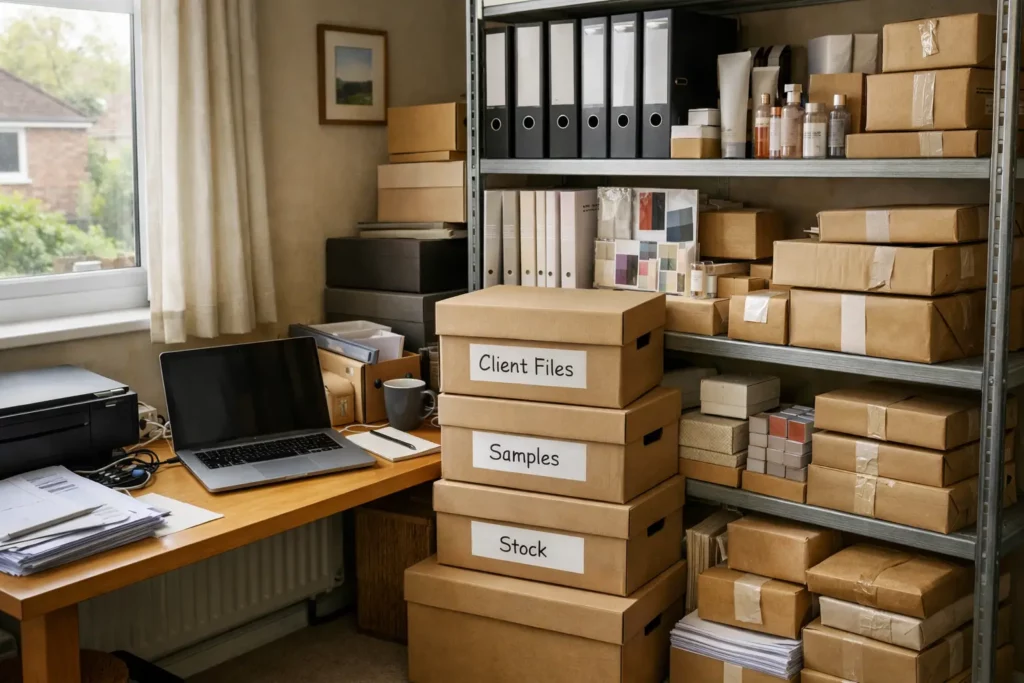
For example, secure external storage units can be used to store larger items safely while keeping your living space organised. It might also be helpful to check what storage facilities offer in terms of security features and site protection, especially if you’re storing valuable equipment or documents.
Furniture, Equipment and Overflow Items
Working from home can also lead to furniture changes. Many people add desks, shelving units or filing cabinets, only to discover that older furniture no longer fits comfortably in the available space.
Rather than overcrowding spare rooms or garages, temporary furniture storage can help keep larger items protected until they are needed again. This approach keeps your home office functional while preserving furniture you may want to use later.
Practical Ways to Keep Your Home Office Under Control
If you’re currently working from home, a few simple adjustments can make a noticeable difference.
Try these steps:
- review your workspace every few months
- remove items you no longer use
- archive documents safely
- store equipment you don’t need daily
- keep your desk as clear as possible
Small improvements to organisation can prevent your workspace from gradually expanding.
If you’re unsure how storage pricing works or whether it’s cost-effective, it’s worth understanding the common assumptions people make about self storage costs.
Working From Home Shouldn’t Take Over Your Home
Remote work has many advantages: flexibility, reduced commuting, and greater control over your schedule but it also introduces new challenges around space and organisation.
Creating a real home office, even in a small house, is about balance. Work should have a place but it shouldn’t take over the rest of your home. With clear boundaries, thoughtful storage and a little organisation, it’s possible to stay productive without sacrificing the comfort of your living space.
If you’re considering self storage options, here is our list of storage facilities.
Final Thoughts on Working From Home
The most successful remote workers understand one simple principle: space influences productivity. A well-organised workspace helps you think clearly, work efficiently and relax once the day is done.
If your home office has started spreading beyond its boundaries, it may be time to reset your approach.
Sometimes the solution isn’t more furniture or more shelves.
Sometimes it’s simply creating a little more space.