When people hesitate about using self storage, the concern is rarely about the concept itself. It’s almost always about cost.
“How expensive is self storage really?”
“Will I end up paying more than I expect?”
“Is storage only worth it short term?”
In reality, most frustrations around storage costs don’t come from high prices, they come from misunderstanding how storage pricing actually works. This article breaks down the most common assumptions people make, what really affects storage costs, and how to make informed decisions that avoid unnecessary expense.
The Biggest Misunderstanding About Storage Costs
One of the most common assumptions is that storage is priced like rent; fixed, inflexible, and long term. In practice, storage costs behave very differently.
Most reputable self storage providers price units based on:
- Unit size
- Location
- Access requirements
- Length of use
- Security and facility standards
This means storage costs are variable by design, allowing people to pay only for what they need, for as long as they need it rather than committing to permanent space.
Storage Costs Are Often Compared to the Wrong Thing
Another common mistake is comparing storage costs to alternatives that aren’t actually equivalent.
People often compare storage to:
- Keeping everything at home
- Renting a garage
- Taking on a larger property
- Signing a commercial lease
What’s often missed is the opportunity cost of those options.
Keeping items at home can:
- Reduce usable living or working space
- Delay moves or renovations
- Create clutter that affects productivity
Renting larger space or commercial premises introduces:
- Long-term commitments
- Higher fixed costs
- Maintenance and utility expenses
When viewed as a temporary, flexible solution, storage costs are often far more economical than the alternatives they replace.
What Actually Affects Storage Costs

Understanding what drives pricing helps avoid surprises.
Unit Size
Choosing the right unit size is one of the biggest cost factors. Many people overestimate how much space they need and end up paying for unused capacity. Using space efficiently by stacking vertically, disassembling furniture, and storing strategically, a smaller unit can work perfectly.
Length of Stay
Storage is often assumed to be expensive over time, but this depends entirely on how it’s used. Short- to medium-term storage is commonly used during:
- Moves
- Renovations
- Life transitions
- Business reorganisations
In these cases, storage costs replace larger expenses elsewhere, rather than adding to them.
Access and Convenience
Units with 24/7 access, drive-up convenience, or premium locations may cost more but they also reduce friction. The key is matching access level to actual needs, rather than defaulting to the most flexible option “just in case”.
Security and Facility Standards
Lower-priced storage options may cut costs on:
- Security
- Environmental controls
- Staffed access
- Maintenance
A professional, secure facility may cost slightly more, but it reduces risk especially when storing valuable, sentimental, or business-critical items.
For clarity on what good standards look like, this guide explains what to expect from a secure self storage facility.
Why Storage Costs Often Feel Higher Than They Are
It’s important to remember that psychology plays a role in pricing as it’s visible, monthly and explicit.
Whereas alternatives often hide costs inside the following:
- Larger rent or mortgages
- Lost productivity
- Stress and delays
- Inefficient use of space
Because it’s a separate line item, it can feel more expensive even when it’s actively reducing total costs elsewhere.
Common Myths About Storage Prices
“Storage Is Only Worth It Short Term”
Many people assume storage only makes sense for a few weeks. In reality, storage is often used for:
- Seasonal items
- Hobby equipment
- Archived documents
- Transitional periods lasting months
- The value comes from flexibility, not duration.
“You’re Locked Into Contracts”
Reputable providers don’t operate like landlords. Most storage agreements allow:
- Upsizing or downsizing
- Short notice periods
- Flexible end dates
“Storage Is Only for Big Moves”
Storage is commonly used for:
- Creating space during renovations
- Downsizing gradually
- Managing overflow without relocating
- Avoiding rushed decisions
These use cases often save money by preventing larger commitments.
How to Keep Costs Under Control
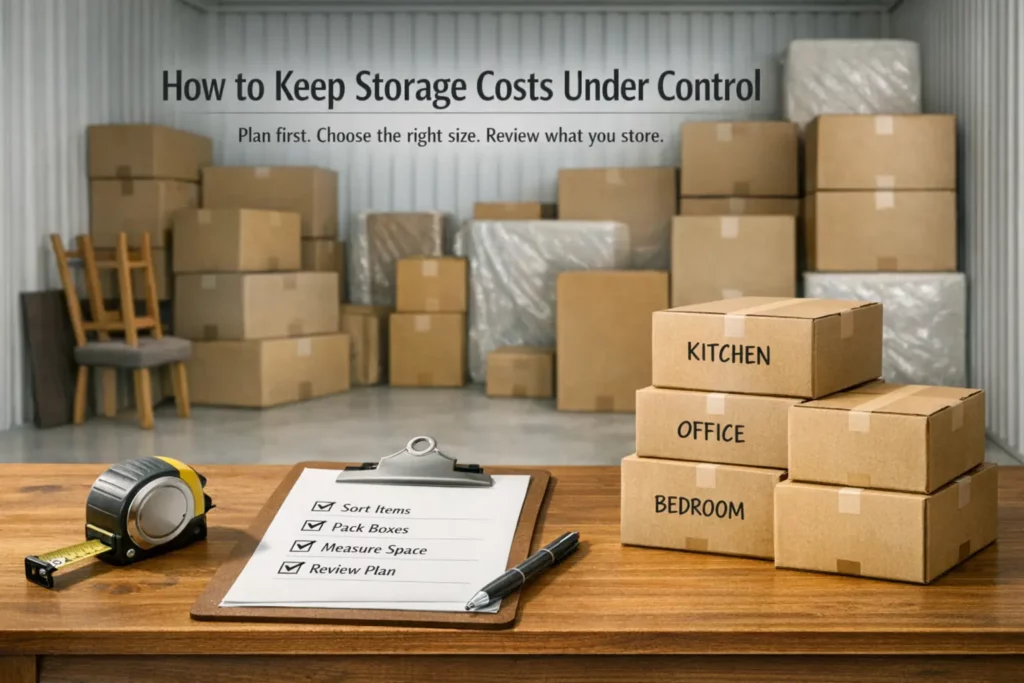
The most effective way to manage storage costs isn’t negotiation, it’s planning. Practical ways to avoid overpaying for self storage include the following:
- Choosing the correct unit size
- Reviewing what genuinely needs storing
- Avoiding “just in case” space
- Reassessing needs periodically
Storage costs often feel more noticeable because they appear as a clear monthly line item, whereas many household and business costs are absorbed elsewhere. Data from the UK’s Office for National Statistics shows how everyday expenses are often spread across housing, utilities, and space-related costs; making flexible alternatives like storage easier to overlook at first glance.
If you’re unsure what’s realistic, Space Centre’s common storage questions guide covers sizing, access, pricing, and expectations in plain terms.
When Storage Costs Are Actually a Smart Trade-Off
Storage costs make the most sense when they:
- Replace higher fixed expenses
- Prevent rushed long-term decisions
- Create breathing room during transitions
- Support better use of existing space
This is why storage is often used during:
- Moves with uncertain timelines
- Renovation projects
- Business reorganisations
- Lifestyle changes
In these situations, storage costs aren’t an extra but rather a temporary investment in flexibility.
Storage Costs At a Glance
- Storage prices are flexible, not fixed
- Most overpayment comes from choosing the wrong size
- Storage often replaces more expensive alternatives
- Visibility makes costs feel higher than they are
- Planning and realistic sizing keep costs under control
Final Thoughts: Cost Is About Context, Not Just Price
Storage costs are rarely the problem on their own. The issue usually lies in expectations.
When storage is treated as a flexible tool rather than a permanent expense, it becomes easier to see where the value lies. In many cases, it’s not about spending more, but about spending smarter during periods of change.
Understanding how storage costs work makes it far easier to use storage confidently, without second-guessing every decision. You will our storage facilities in Bristol, Stroud, Stonehouse, Gloucester & Cheltenham.