Most small businesses don’t suddenly run out of business storage space. It happens gradually.
A few extra boxes of stock.
Some archived paperwork kept “just in case”.
Equipment that no longer fits neatly where it used to.
At first, it’s manageable. Then one day, the space that once worked effortlessly starts working against you. What used to be a workspace becomes part storage area. What used to be efficient becomes slightly slower, slightly harder, slightly more frustrating.
And that’s when the real cost begins.
Why Business Storage Space Becomes Limited Faster Than You Expect
Growth is rarely neat. It doesn’t arrive with a plan for where everything will go. Instead, it shows up as more stock, more tools, more documents and more moving parts.
But most small businesses don’t expand their space at the same time they expand their operations.
So everything gets absorbed into the same environment.
Desks become storage surfaces.
Corners become overflow areas.
Rooms start doing multiple jobs.
And over time, business storage space stops being a background consideration, and becomes a daily constraint.
As your operations expand, from stock and equipment to documentation and compliance requirements, businesses naturally accumulate more physical assets over time, something reflected in official guidance on running and managing a company in the UK.
The Hidden Cost of Limited Business Storage Space
Running out of business storage space doesn’t just affect how things look.
It affects how your business functions.
Time slows down
When space is tight, simple tasks take longer.
- finding tools
- locating stock
- accessing documents
What should take seconds starts taking minutes.
And those minutes compound.
Productivity drops
When your workspace is cluttered or restricted, it’s harder to move efficiently.
Tasks feel heavier. Workflows break down.
And your output is affected, even if you don’t immediately notice it.
Mistakes increase
Limited space leads to:
- misplaced items
- incorrect stock handling
- overlooked details
Not because you’re careless, but because your environment makes precision harder.
Growth gets constrained
This is the biggest cost. When your business storage space is maxed out, growth becomes harder to manage as you:
- hesitate to order more stock.
- delay expansion decisions.
- start working around your space instead of through it.
And that slows momentum.
When Your Workspace Stops Being a Workspace
There’s a tipping point most businesses recognise.
It’s when your workspace stops feeling like a place to work and starts feeling like a place to manage things. You’re not just doing your job anymore, you are navigating around boxes, reorganising constantly and shifting things just to complete tasks.
That’s not just inefficient. It’s draining.
Because your environment is no longer supporting your work, it’s competing with it.
Business Storage Space and the “Everything Stays Here” Problem
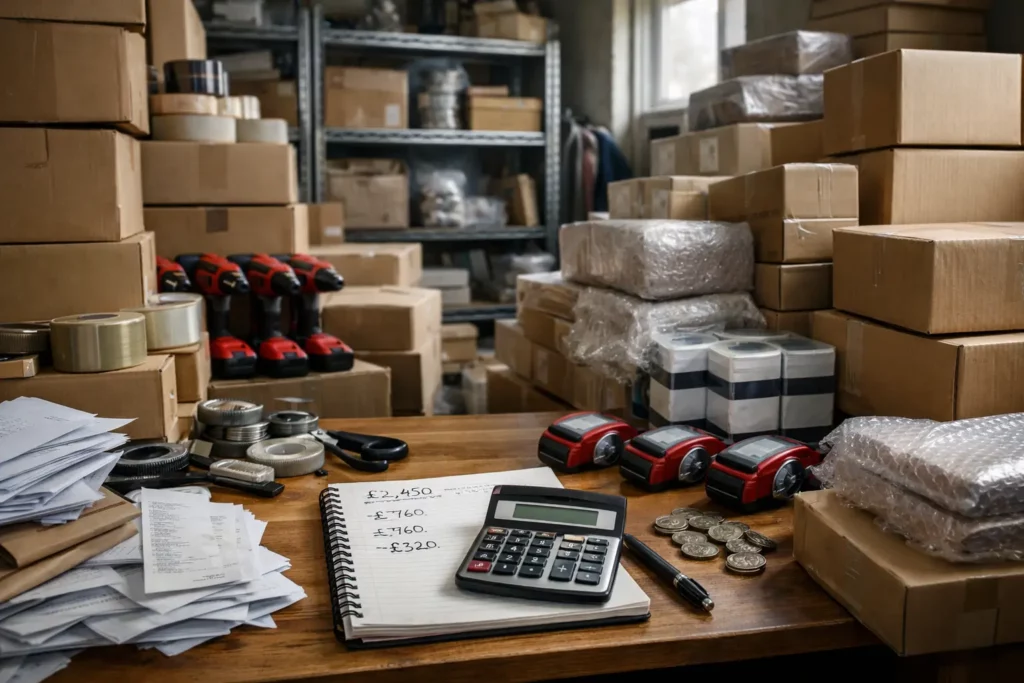
One of the biggest mistakes small businesses make is trying to keep everything on-site.
Everything.
All the time.
But not everything needs to be immediately accessible.
Think about what’s actually used daily:
- vital tools
- active stock
- current documents
Now compare that to what’s simply present:
- archived files
- seasonal stock
- rarely used equipment
- backup materials
When everything stays in the same space, your business storage space becomes overloaded — not because it’s too small, but because it’s trying to hold too much at once.
A Smarter Way to Think About Business Storage Space
The businesses that operate most efficiently don’t necessarily have more space. They use it differently.
They separate what’s needed now from what’s needed later. They create working space and storage space.
Not everything has to live in the same place.
And once you make that shift, space stops being fixed and becomes flexible.
Business Storage Space as a Strategic Tool (Not a Last Resort)
Business storage is often seen as something you turn to when you’ve run out of options.
In reality, it works best when used proactively.
Not to solve a problem.
But to prevent one.
Used properly, it can:
- free up your primary workspace
- improve workflow efficiency
- create room for growth
- reduce day-to-day friction
It becomes part of how your business operates and not just where things are kept.
Who This Matters Most For
This isn’t just a niche issue. It affects a wide range of businesses:
- ecommerce sellers managing stock from home
- trades storing tools and materials
- consultants holding physical records or equipment
- small teams working in limited office space
If your business has physical components, it has storage pressure whether you’ve recognised it yet or not.
When Business Storage Space Starts Making Financial Sense
There’s a point where holding everything in your primary space becomes more expensive than separating it.
Not just in rent or square footage.
But in:
- lost time
- reduced efficiency
- missed opportunities
At that stage, creating additional space isn’t a cost.
It’s a decision that supports growth.
Recommended: Self Storage Security: What Businesses and Individuals Should Look For
Get More Business Storage Space from Space Centre
If your business is starting to feel restricted by the space it operates in, it may not be a growth problem but rather a space problem.
Creating additional business storage doesn’t mean disrupting how you work.
It simply means giving your business room to operate properly again.
At Space Centre Self Storage, we provide flexible, secure storage solutions designed to support growing businesses whether you need space for stock, equipment, or documents.
Because when your business storage space works better, so do you.