Most people focus on materials, contractors and timelines when planning home renovations. What often gets overlooked is space.
Furniture pushed into corners. Belongings stacked in spare rooms. Floors half-covered with protective sheets. It might seem easier to leave everything inside the property while work happens around it.
In reality, that decision can quietly increase labour time, damage risk and overall project costs. Before any home renovations begin, creating clear, usable working space is one of the simplest ways to protect your budget.
Why Home Renovations Become More Expensive in Cluttered Spaces
Contractors work more efficiently when they have unrestricted access.
If trades have to:
- Move furniture repeatedly
- Work around stored items
- Protect belongings from dust
- Navigate tight, cluttered rooms
Labour time increases. And labour is often the most expensive part of home renovations. According to guidance from the Federation of Master Builders (FMB), clear access and proper preparation can significantly improve project efficiency and reduce delays. Even small ones can compound quickly. An extra hour per day across a two-week renovation adds up.
Home Improvements and Dust: The Damage Most People Underestimate
Dust is not cosmetic. During home renovations involving plastering, sanding, tile removal or flooring work, fine particles travel far beyond the immediate work area.
Even with sheeting:
- Upholstery absorbs particles
- Electronics collect dust internally
- Wooden furniture can scratch
- Soft furnishings trap debris
Clearing rooms entirely rather than shifting items around dramatically, reduces cleaning time and potential replacement costs. The more space contractors have, the less protective improvisation is required.
Doing Home Renovations? Think About Access Before Aesthetics
When planning home renovations, people often prioritise design boards and material samples. Access should always come first.
Ask yourself:
- Can contractors move freely between rooms?
- Is there space for tools and materials?
- Are walkways clear and safe?
- Is there room for protective coverings?
Clearing space improves workflow. Better workflow reduces labour hours. Reduced labour hours lower total cost which is operational thinking and not just aesthetic planning.
Why Short-Term Storage Supports Home Improvements
Temporary off-site storage is not about convenience. It’s about control.
During home renovations, storage can:
- Remove furniture completely from the work zone
- Protect sentimental or valuable items
- Prevent accidental damage
- Allow phased renovation room by room
- Reduce daily disruption
Rather than living around your project, you create a defined construction zone. If you’re renovating multiple rooms or undertaking structural changes, this separation becomes even more valuable. For example, most short-term of long-term storage units can provide secure, accessible space during home improvement projects. Read this practical guide on how to use furniture storage when moving house.
Doing Home Renovations? Plan in Phases
One of the most effective strategies during home renovations is phased clearing.
Instead of emptying your entire house at once, you can:
- Clear one room completely
- Complete work in that area
- Move belongings back
- Progress to the next zone
This approach works especially well when paired with short-term storage. While making renovations feel more controlled and less invasive, it also reduces:
- Stress
- Household disruption
- Risk of damage
- Overlapping trades
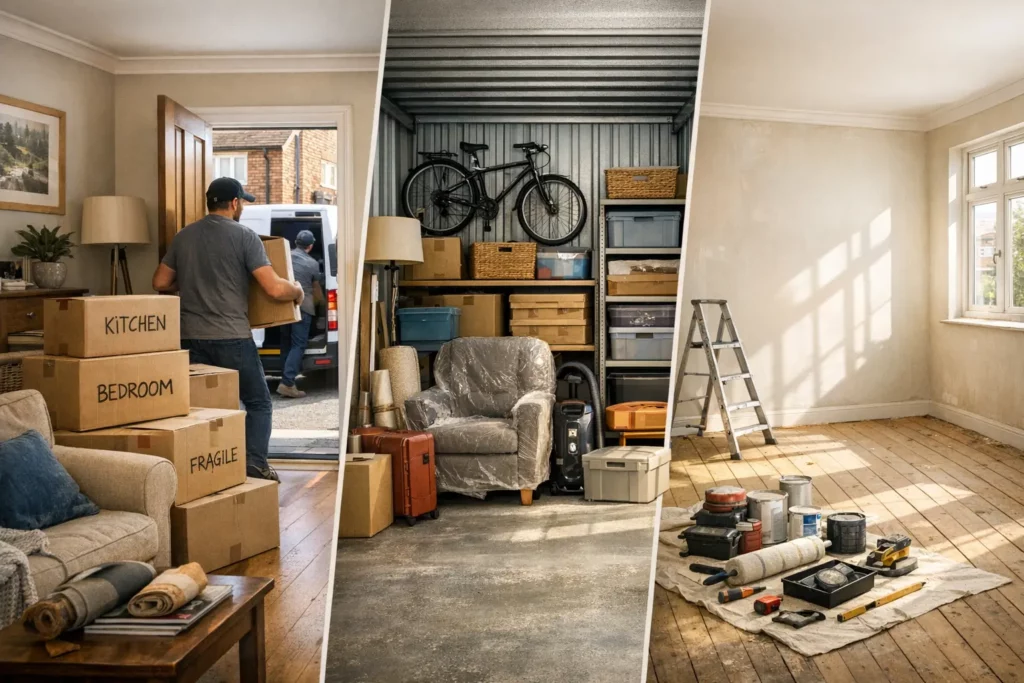
Renovations and Home Insurance: A Practical Consideration
Many homeowners don’t review insurance before starting home renovations. Some policies require notification if structural work is taking place. Others may exclude damage caused by renovation-related risks.
Clearing the space reduces potential claims scenarios:
- Accidental paint damage
- Scratched flooring
- Broken furniture
- Dust-related electronics issues
It also simplifies documentation. Fewer items inside the renovation zone mean fewer variables so it’s worth reviewing your policy before major works begin.
At Space Centre Self Storage, we provide complimentary insurance for every unit up to a value of £3,000. If you need more cover, you can arrange additional protection through our recommended self storage insurance provider or securing your own.
How Clearing Space First Saves Money Long-Term
The savings aren’t always obvious upfront. They show up in:
- Fewer labour overruns
- Reduced accidental damage
- Lower cleaning costs
- Less replacement furniture
- Faster project completion
Time is money in construction. If a contractor can complete work in 8 days instead of 10 because rooms are clear and accessible, that difference can outweigh the cost of temporary storage entirely.
Preparation influences outcome more than most homeowners realise.
A Practical Checklist Before Starting Home Renovations
Before your project begins, answer these question honestly so you can prevent avoidable stress later:
- Have I removed non-essential furniture?
- Are valuables stored safely?
- Can contractors access walls, floors and ceilings freely?
- Have I created space for tools and materials?
- Have I considered temporary storage for bulky items?
If you’re weighing up costs, this breakdown may help clarify how storage pricing works in practice.
Closing Thoughts on Storage and Home Improvements
Home renovations are disruptive by nature but unnecessary disruption often comes from lack of preparation, not the work itself. Clearing the space first creates efficiency, protection, better workflow, lower risk and faster completion more often than not.
It’s not just about making life easier for contractors. It’s about making the project more financially controlled. When planning home renovations, think beyond design. Think operationally. Space is not empty. It’s leverage.